

Vested Interest is a bi-weekly newsletter about what the latest developments in economics and finance might mean for your money, career, and life in general.
By submitting your email you agree to Wealthfront’s Terms of Use and will receive newsletter emails at the address provided. You may unsubscribe at any time.
Are football bets a good investment?
January 16, 2026
 | ||||||
| Share this newsletter | ||||||
 Collateralized pigskin obligations, synthetic Cowboys default swaps, things of that nature? | ||||||
 | ||||||
| Three numbers that explain the economic moment. | ||||||
| ||||||
 | ||||||
| Where housing prices rose and fell the most in 2025. | ||||||
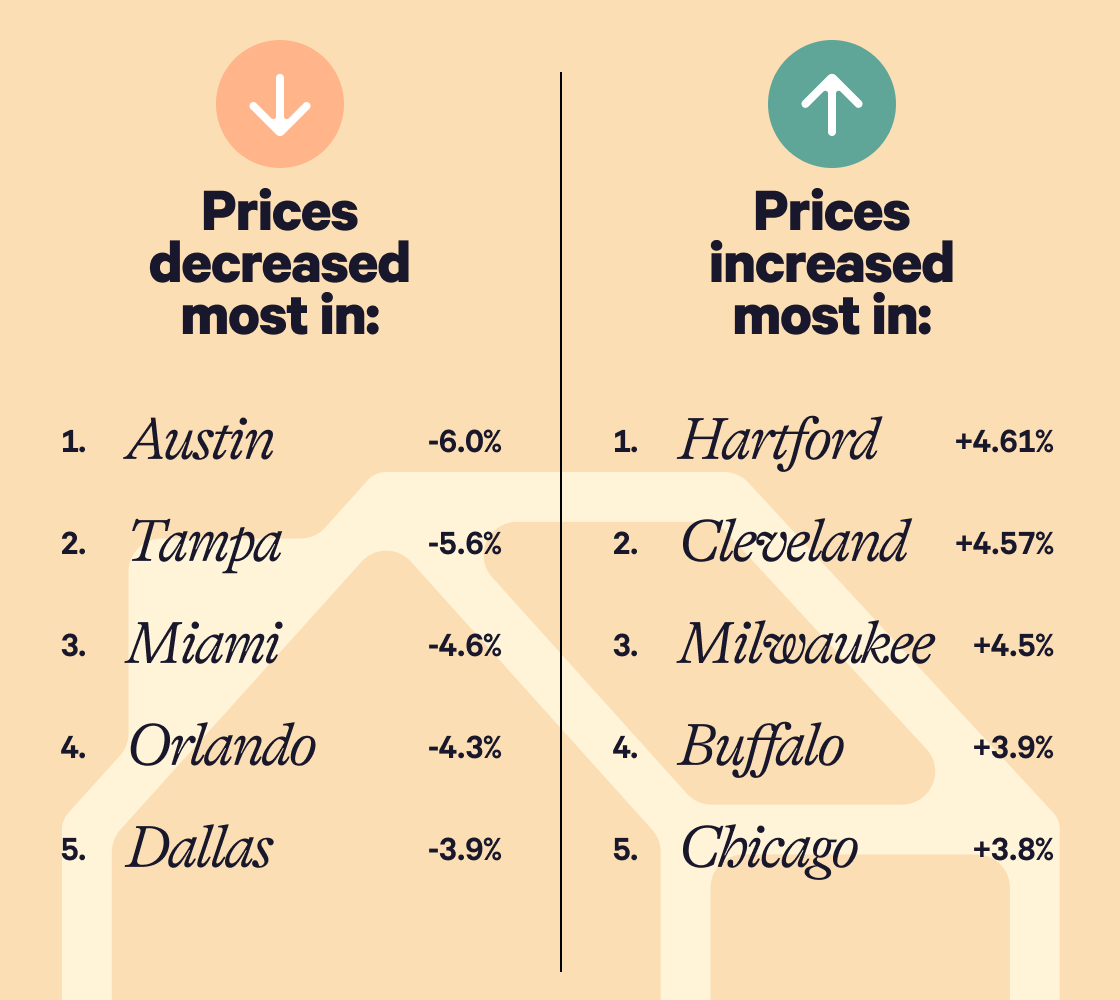 Source: ResiClub analysis of YoY Zillow data for 50 largest metro areas. Migration to the Southeast surged during and after the pandemic, driving up prices and triggering new construction. Now, though, states like Texas and Florida have too much inventory while buyers are competing for homes in the Midwest and Northeast that are still comparatively cheap. (Average sale price in Hartford: $189,744; average sale price in Austin: $489,253.) | ||||||
 | ||||||
| Which of these is now the most valuable work of modern art in history? | ||||||
 It’s the one in the lower right — Portrait of Elizabeth Lederer by Gustav Klimt, which recently sold for a record-breaking $236 million in New York City. (The other three, respectively, are Andy Warhol’s Shot Sage Blue Marilyn, American artist Cassius Marcellus Coolidge’s painting of dogs getting arrested by dog police officers for playing poker, and a robot made of money drawn by a Wealthfront staffer’s son when he was 7.) The art world hopes the sale is a sign of resurgence in a market that’s been experiencing a multi-year slump — a decline that observers have pinned on factors ranging from the chilling effects of tariff uncertainty to high interest rates, Millennial philistinism, and even war. | ||||||
 | ||||||
| Is betting on sports an investment? “Prediction markets” would like you to think so. | ||||||
 Universal Pictures With somewhat unnerving speed, betting on sports in the United States has gone from being a predominantly criminal activity to a legal, frictionless form of everyday entertainment. Now, according to some of its boosters, it’s even a form of investing. Open a “prediction market” app and you can buy “event contracts” that pay you, say, $100 if the Houston Rockets win their next game and $0 if they don’t. Which isn’t that different, advocates claim, from buying commodity futures. It’s true that some kinds of speculative investing, like day-trading individual stocks, have long been compared to gambling. But do sports wagers really belong alongside index ETFs and bond ladders? Philosophically speaking, economists like decorated financial researcher Ken French tend to say no, because betting on the New York Jets does not facilitate an economic purpose that adds value to the world. But it’s also a question you could approach empirically. And while betting companies are not typically forthcoming with information about their clients’ returns — perhaps there’s a lesson there! — it happens that the state of Illinois publishes monthly numbers on the amount that individuals within state borders are betting on sports and how much they’re getting paid back in winnings. Since January 2020, all told, this group has wagered about $47 billion online on professional sports and made $43 billion back, a net loss of 8.5%. (In the same time period, by comparison, the S&P 500 has gained 112.5% — although that number is, historically speaking, anomalously high.) This result is not surprising: Sports books set odds with the goal of attracting roughly equal numbers of winners and losers for each bet, and then take sizable fees (the house’s cut, “vig,” “juice,” etc.) from the winners. There’s no way that gamblers, in total, can take out more than they put in. Prediction markets, though, charge lower fees — for now — than sports books. And what if you were really good at predicting sports outcomes? Is there a potential edge at hand for a true ball-knower? Leaving aside that research shows the average sports bettor is significantly worse at predicting winners and losers than they think they are, a paper published in 2025 in the Journal of Sports Analytics by University of North Florida professor B. Jay Coleman is informative. Coleman, who studies operations management and quantitative methods, evaluated the historical predictions made between 2016 and 2024 by 29 different college football team-ranking models and found the five most accurate. In a best-case scenario using the averaged predictions of these five systems to bet against the spread, Coleman told us, a hypothetical gambler could have won 51.5% of their bets over the nine years he studied. Is that good? Well, even if you subtracted the relatively small 1.2 percent fee charged at the moment by one leading prediction market, it would come out to something like a 1.8% annualized return. That’s less than the current rate of inflation, and less than half of what you could have made last year, for instance, by putting cash in a money market fund. Over the past decade, even funds that hold short-term Treasury bills — which are some of the most conservative investment vehicles possible — have beaten our hypothetical best-on-Earth gambler, returning 2% on an annualized basis. | ||||||
| Put simply, getting a “return” by betting on sports is very tough. | ||||||
| That’s true, it seems, even if you have the best system around — and there’s no guarantee a historically successful system is going to keep working. The entity taking the other end of your “event contract” tomorrow — which could be a hedge fund, by the way — has the same access to past data that you do. Psychological studies of sports betting, meanwhile, have found that such wagers are associated with “substantial overoptimism” and the release of neurotransmitters like dopamine. Think about it this way: Would you let someone else manage your money if they told you their investing philosophy revolved around neurochemical stimulation and the power of positive thinking? Even professionals have trouble consistently making correct predictions about companies and markets, which is why diversification exists. And while it might not be theoretically impossible that an individual working on their own could get better returns making predictions about sports, it is, as they say, a long shot. | ||||||
| Share this newsletter | ||||||
 # of mentions of AI in this issue 1 # of mentions of crypto in this issue 0 # of mentions of the New York Jets in this issue 1 |
One new issue, bi-weekly
By submitting your email you agree to Wealthfront’s Terms of Use and will receive newsletter emails at the address provided. You may unsubscribe at any time.