

Vested Interest is a bi-weekly newsletter about what the latest developments in economics and finance might mean for your money, career, and life in general.
By submitting your email you agree to Wealthfront’s Terms of Use and will receive newsletter emails at the address provided. You may unsubscribe at any time.
The author of “The Psychology of Money” on navigating our erratic, ominous market
September 18, 2026
 | ||||||
Greetings! Did you know that each issue of Vested Interest, like Apple’s new Duo phone, is foldable? Just take the screen you’re reading it on, set it on the ground in the parking lot of a Texas Roadhouse, and crack it in half with a car battery. Voilà, you’re on trend! In this edition …
| ||||||
 Wealthfront | ||||||
 | ||||||
| Three numbers that explain the economic moment | ||||||
| ||||||
| Share this section | ||||||
 | ||||||
| How close are you to a “swimming pool and a big yard” kind of lifestyle? | ||||||
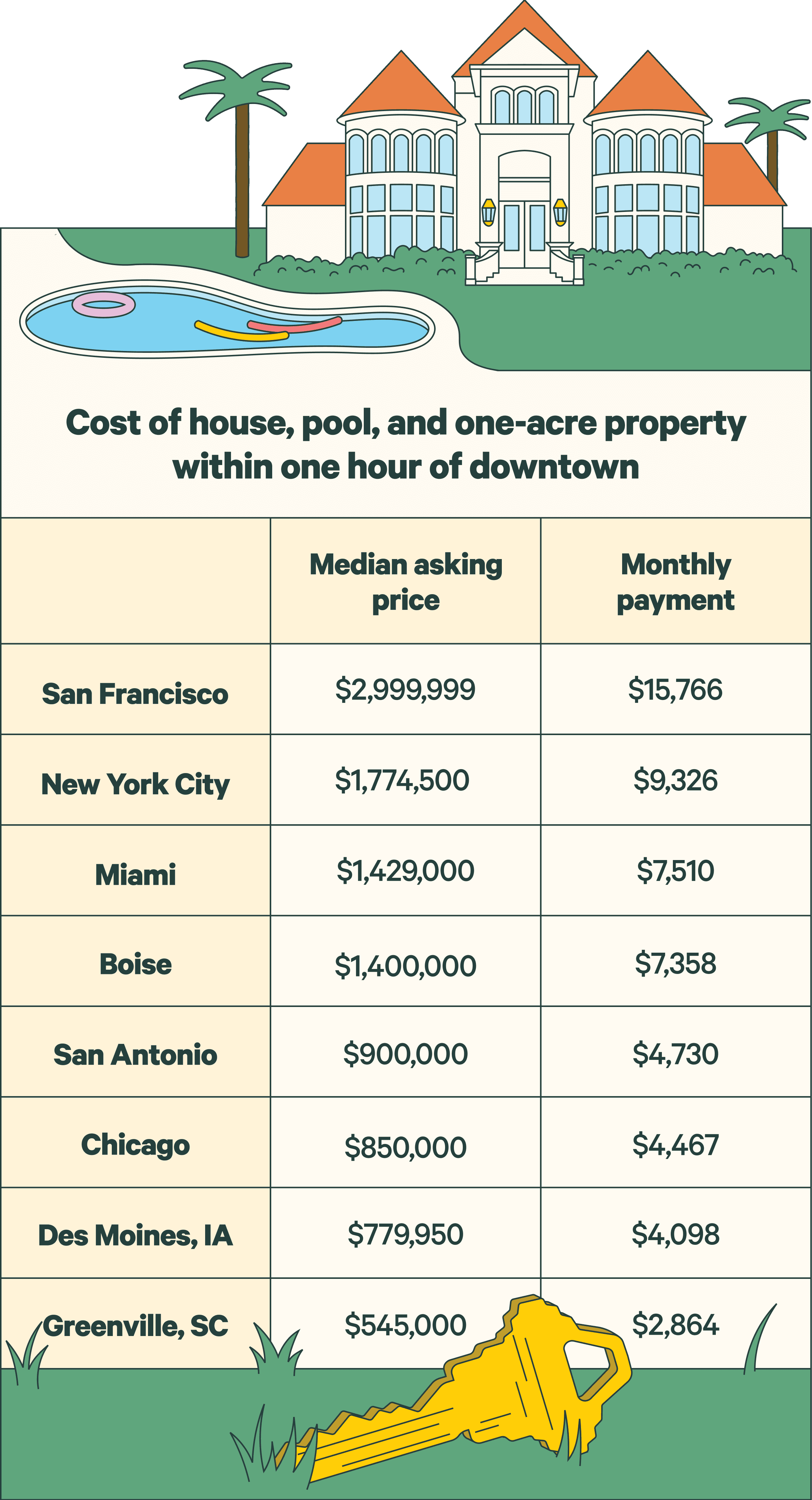 Source: Zillow.com as of 9/1/2026. Excludes homes over 4,000 square feet so as to be at least somewhat useful to the typical reader. Mortgage payment assumes 30-year fixed rate and 20% down payment and does not include taxes or insurance. Image by Wealthfront. Very roughly speaking, you’d need annual household income in the $100,000 to $600,000 range to afford the properties above—and BTW, we ran the data for the South of France and got a median price of $1.1 million, placing it between Boise and San Antonio affordability-wise. Sounds like a steal! | ||||||
| Share this chart | ||||||
 | ||||||
| Circumnavigating the Strait, repeatedly | ||||||
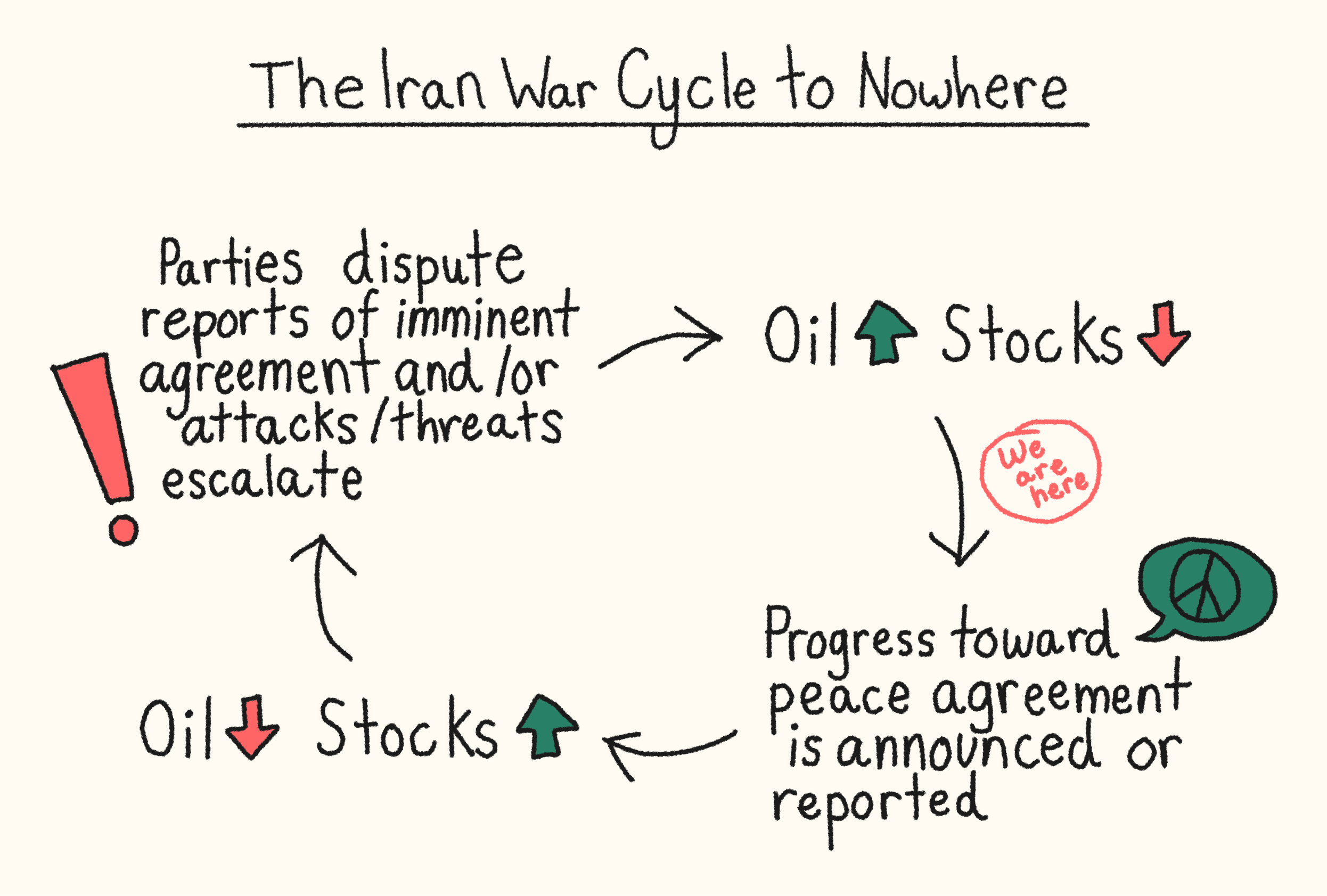 Wealthfront Oil prices rose past $100 a barrel last week, frightening the stock market. Sound familiar? That’s because it’s Stage Two in The Iran War Cycle to Nowhere, i.e. the loop markets have been stuck in for the past six-and-a-half months. (Information in this newsletter is accurate as of market close on the day before publication but is subject to change.) We’ve previously reached this stage on March 5, Apr. 21, June 10, and July 23, to name a few instances. What usually happens next is that interested parties start to chatter about ceasing hostilities (Apr. 7, May 23, June 14, etc.), after which the market recovers (see: April 8, May 27, June 15). We may be closing in on that stage as you read this—but eventually things have always returned to Stage One: Posturing about the terms of a potential deal, making threats, and ultimately launching more attacks (Feb. 28, March 21, June 10, July 22). Fingers crossed that this spinning wheel runs out of energy soon. | ||||||
| Share this section | ||||||
 | ||||||
| Morgan Housel, the author of The Psychology of Money, on keeping our lizard brains from working against our financial best interests | ||||||
We recently sat down with Morgan Housel, the super-duper-bestselling author of The Psychology of Money, for a conversation about how best to handle market chaos, geopolitical chaos, and whatever it is the AI companies are doing when you read this. He also gave us some insights tailored to both younger parents, older parents, and ambitious teens. Here’s a condensed version of our conversation, which you can watch in full by clicking here. This year has thrown a lot at people. War, inflation, AI. But the stock market keeps going up. Is there a contradiction there? If you look at history, there’s never been a moment in which the future was clear. It’s always felt like, oh, the past had certainty, but now, today, we live in uncertainty. If you’re an investor waiting for the clouds to part, there’s always going to be things to worry about. Investing is enduring that uncertainty. That’s what you’re getting paid for, over time. How do you handle commentary that encourages you to change your portfolio based on news events or the possibility that we’re in a bubble? It’s been true for all of human history that negativity is more seductive than being optimistic. People are more perceptive of threats than opportunities, and financial media is like this too. If your outlook on the stock market is, “I think things are going to be average for the next five years,” nobody’s going to have you on their show. If you have a forecast of, “I think the world’s going to collapse in the next 24 months,” everybody will have you on. I have no idea when the next recession will happen or what will cause it. But you can know with certainty how people will react to it. They will overreact to risk. They will take whatever happened in the last 12 months and assume it’s going to keep happening forever. My definition of optimism is, I’m very confident that over the next 20 or 30 years, the economy will become much more productive. But the path between now and then can be nonstop volatility, nonstop recessions and pandemics and financial crises. Do you follow the financial news every day? Is that a bad idea? A lot of people, I think, genuinely find tracking the economy and the stock market enjoyable. I’m one of those people too. I’ve followed the stock market every day for 20 years. But I don’t let it influence my investing decisions. Investing is one of the only fields in the world where the less action you take, the better you’re likely to do. If you want to get into good physical shape, go to the gym. If you want to get better at playing piano, practice five hours a day. But there’s so much evidence in investing that the harder you try, the more you trade, the worse you’re going to do. A novice with no financial education or background who does nothing for 10 or 20 years will outperform, historically, 90% plus of professional active investors who have the best education, the best training, who work 50 hours a week trying to forecast what will happen next. Was that always your investing philosophy? Like most ambitious 17-year-old boys, I thought I should start day trading stocks. I’ve done a lot of talking with high-school students, and every single group, without fail, every time, will ask some version of the question, “what penny stock should I buy to double my money this week?” And I have to remind myself, these are smart kids, but looking for the fastest way to make money is everyone’s intuition. I started day trading stocks and it didn’t work. And then I was like, “oh, I’m going to be a long-term investor—I’m going to hold stocks for five days at a time.” And I kept losing money. I’d been investing for two or three years before I was like, I should just invest in low-cost index funds. What do you tell people who are making smart financial decisions, investing the “right way,” but still feel like their dreams are out of reach? If your expectations grow faster than your income, you will never be satisfied. Some of the people that feel like they don’t have enough for a safe retirement—there’s a very good chance that they have an amount of money that would make someone else totally content. So managing expectations is really important. You can change your investments, you can do a better job here and there. But the biggest lever to pull is probably your expectations. You have kids. How do you balance between providing them a good quality of life and making sure they stay ambitious? You don’t want your kids to suffer, but you do want them to struggle. You want them to learn the value of a dollar, and the only way that they can learn the value of a dollar is to experience its scarcity. Having to learn what it’s like to earn a meager paycheck is a very important skill. The other side of that is, by the time your child is in their 60s and 70s, they probably don’t need your money. When kids need your money is when they’re 30 and they’re trying to buy a house and get daycare and they don’t have a high income themselves. And so I think it’s a good philosophy that if you want to leave money for your kids, do it when they’re young. | ||||||
| Share this story | ||||||
 # of mentions of AI in this issue: 2 # of mentions of Texas Roadhouse in this issue: 1 Width of the infotainment screen in the 2027 Cadillac Escalade IQ: 55 inches |
One new issue, bi-weekly
By submitting your email you agree to Wealthfront’s Terms of Use and will receive newsletter emails at the address provided. You may unsubscribe at any time.