

Vested Interest is a bi-weekly newsletter about what the latest developments in economics and finance might mean for your money, career, and life in general.
By submitting your email you agree to Wealthfront’s Terms of Use and will receive newsletter emails at the address provided. You may unsubscribe at any time.
Wall Street is scapegoating index investors again
July 17, 2026
 | ||||||
 Is the alleged bubble created by automated index investing a threat to the bull market? We’re not so sure. (Illustration by Wealthfront. Bull image via Unsplash.) | ||||||
 | ||||||
| Three numbers that explain the economic moment | ||||||
| ||||||
| Share this section | ||||||
 | ||||||
| Wanna bet on it (for some reason)? | ||||||
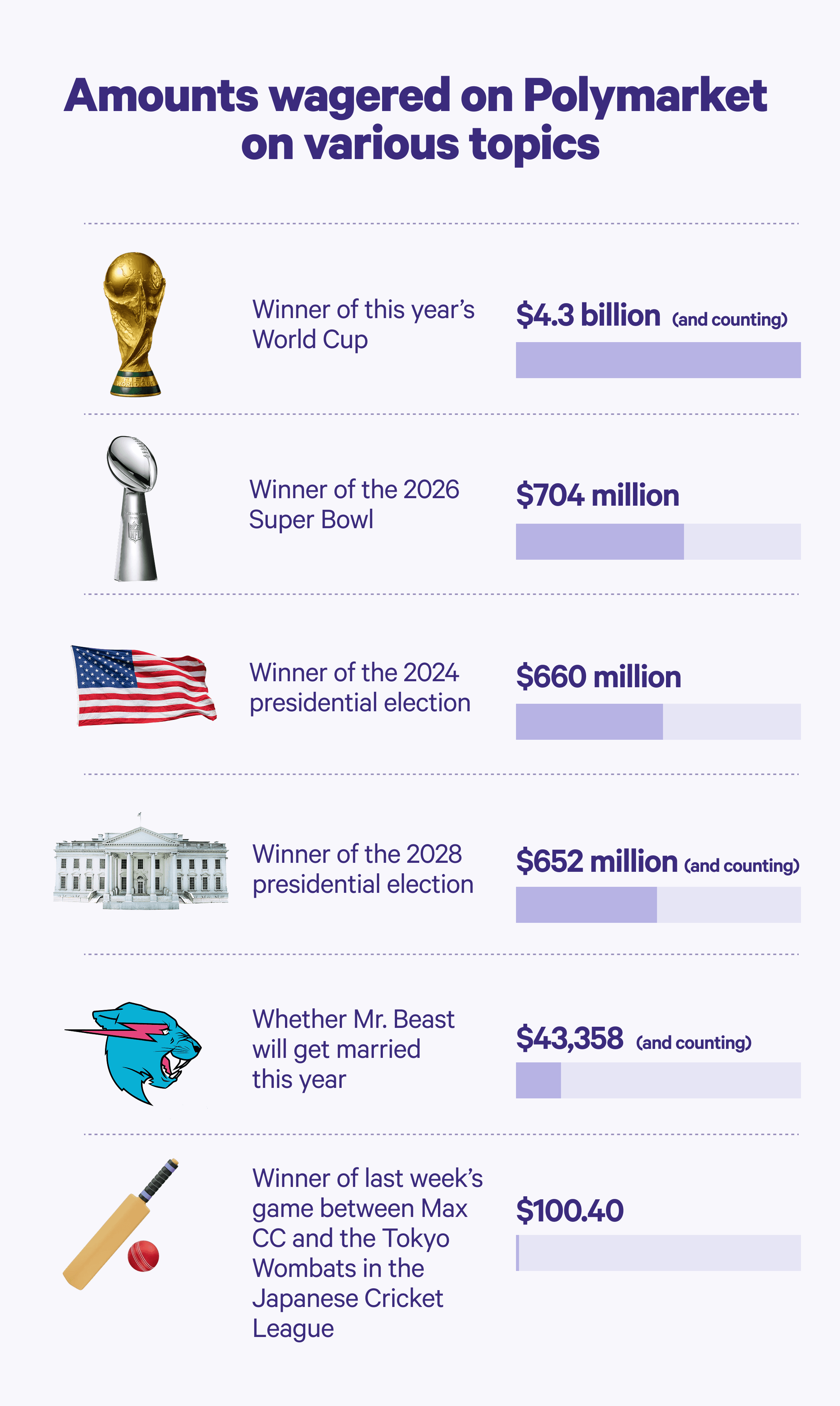 Images via Wikipedia, Americanflags.com, PNGEgg, Seeklogo, and Pinterest. Per a recent Wall Street Journal report, more than 70% of prediction market users lose money—with a two-thirds of the profits that do get made going to a tiny 0.1% slice of participants that includes institutional traders like hedge funds. Potentially coming next: Prediction market ETFs! | ||||||
| Share this chart | ||||||
 | ||||||
| Exactly how much to save for your child’s first home | ||||||
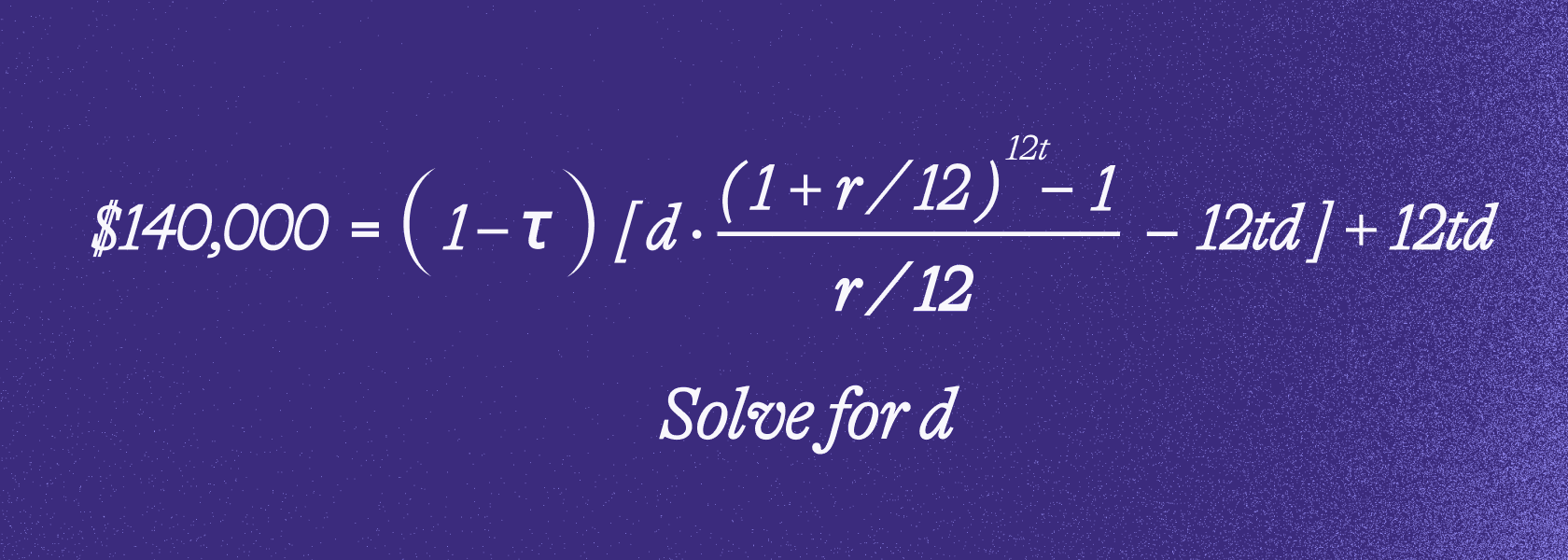 Assumes 8% annual rate of return (r) and 15% capital gains tax upon withdrawal (tau). Does not account for annual taxes on dividends, which will vary according to circumstances. Above: A calculation of the monthly deposit (d) into a custodial account that you’d have to make for the next 21 years (t) to save enough for a 20% down payment on a typical starter home in 2047. (The idea here is you’re saving for a hypothetical child born in 2026.) Realtor.com estimated for us that such a home will cost about $700,000 in 2047 dollars, which translates to $140,000 down. And given the assumptions detailed above regarding growth and taxes, that works out to a monthly contribution of about $238. | ||||||
| Share this section | ||||||
 | ||||||
| Are passive investors—like you, perhaps—making the stock market do too well? | ||||||
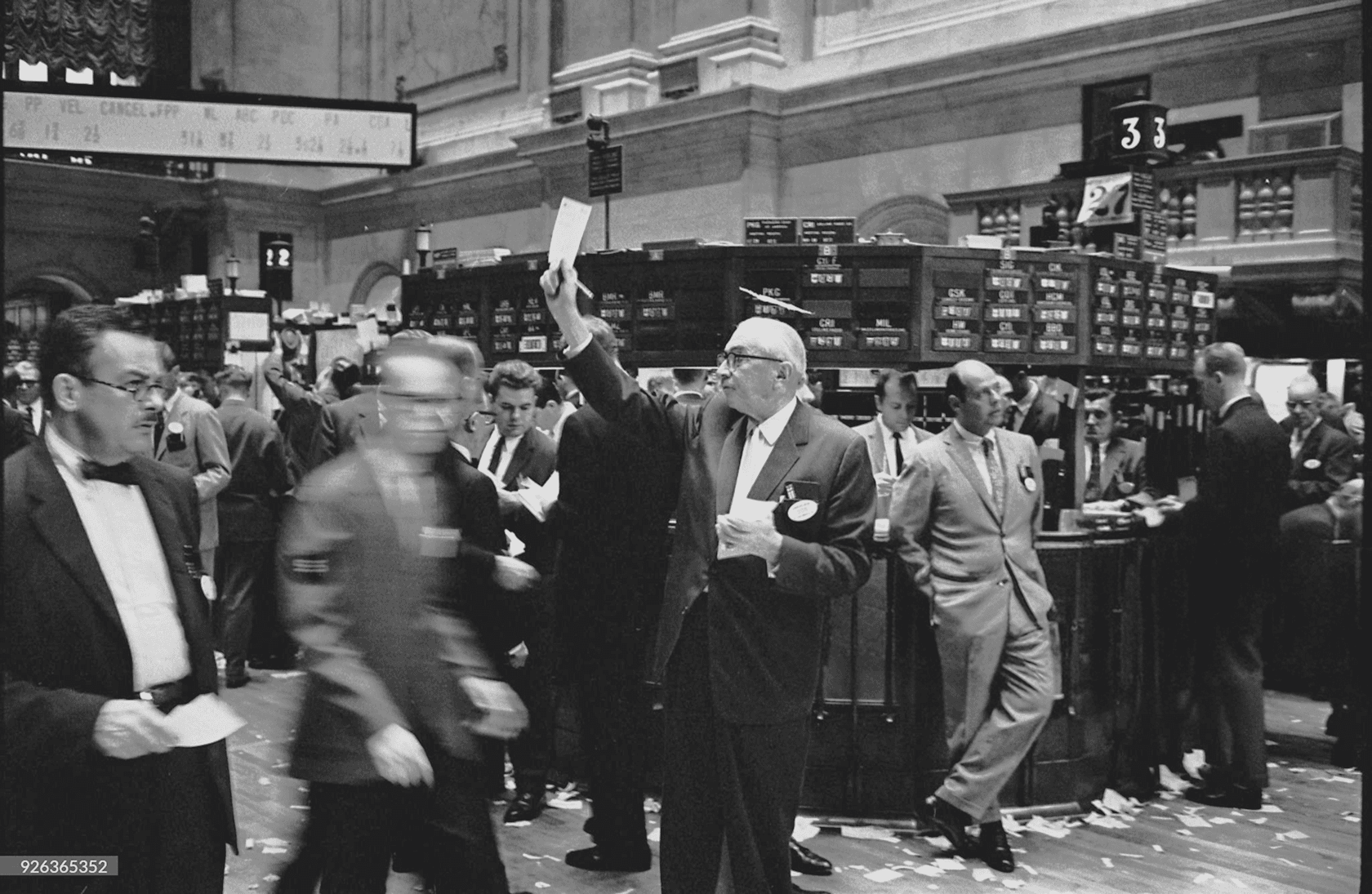 The New York Stock Exchange in its pre-index days (i.e. 1963). Image via Getty. The SpaceX IPO has triggered another outbreak of an old gripe on Wall Street: Passive index-fund investors, it’s said, are overinflating stock prices and creating a market-wide “bubble.” (Last week, the company was added to the Nasdaq-100, although its price subsequently dropped during a bad stretch for tech.) Even before the SpaceX launch, the Economist reported that a 2021 working paper which shows how a passive-investing bubble could develop was circulating in the finance industry; Big Short hero Michael Burry made the bubble accusation on a podcast in late 2025 with bestselling author Michael Lewis. If you’re reading this newsletter, it’s entirely possible that you’re a passive index investor. Should you feel bad about that—or do something about it? How index investing works Passive investing—putting one’s money into an entire market’s worth of stocks, typically via funds that hold an index like the S&P 500®, and then leaving it alone—has been a great deal for investors for several decades. Every year, on schedule, tallies show that passive strategies continue to outperform most stock-picking “active” funds over the long run. The potential problem, in theory When index funds put new customers’ money into the stock market, it has to go into the companies that make up a given index, increasing demand for those shares. One could imagine a world in which passive, undiscriminating flows consistently inflated the value of entrenched index constituents well past what was justified by their performance or the broader state of the economy. (And it’s true that stock prices right now, relative to companies’ actual earnings, are historically speaking on the high side.) Eventually, though, reality could catch up to some of these companies—via a major scandal, let’s say—and their stocks would suddenly plummet in worth, potentially triggering a wider panic. (Indexes can and do drop problematic members, which forces automatic selling by index funds; as it happens, the S&P 500® replaced Enron with Nvidia.) Why people are still talking about this one study One way that passive investment inflation could be avoided, in theory, is if passively managed inflows were regularly offset by actively managed outflows. In the scenario described above, for instance, active investors who believed that valuations were getting too high would have an incentive to sell their shares to avoid future losses. What the researchers from Harvard and Chicago found is that, on average, this doesn’t happen. Each new dollar that goes into the stock market, they report, pushes the market’s total value up by about $5. (If you’re wondering how exactly that works, Gabaix told us to think about the “inelastic demand” created by automatic index-fund buying. A buyer who is obligated to purchase shares of Index Company X at any price is going to push that price higher than one who could take it or leave it.) But is the call also coming from inside the house? The people complaining that indexes are causing bubbles are usually active fund managers, who have lost a lot of business in recent decades to passive funds charging lower fees for what are often better results. And there are still a lot of active managers—Morningstar reports that there are $16 trillion worth of assets under active management in the US, nearly half the market—plus an increasing number of retail investors engaging in active trading themselves. History shows that active traders’ collective ability to discern when stocks are overvalued is not great. Mania-driven bubbles certainly precede the 1970s origins of index investing. A recent Morningstar examination found that during market downturns—when an ability to spot distortions and overvaluations would conceivably be rewarded—active managers have still been outperformed by indexes. Recently, a number of high-profile stocks have recovered from losses because of retail traders “buying the dip”; in plain English, what that means is that when one set of active investors thinks a certain company has gotten overvalued and starts selling, it’s often another set of active investors, rather than index funds, who are rushing in to keep its price up. (Like with everything else, you can probably blame the phones for this.) The equivocal but empirically grounded conclusion What this whole debate is really about, perhaps, is a question more fundamental than active vs. passive: Are there too many investors in the market right now, period? After all, even if there weren’t index funds, there would still be a lot of regular individual investors putting money into stocks, and probably into the biggest and arguably most overconcentrated ones. (Like SpaceX—although its price is lower now than it was before it gained automatic Nasdaq-100 inclusion.) If it’s unsettling to you that no one really knows the answer to that question, consider that the best way to prepare for a potential bubble-popping, historically, has been … keeping money in passive index funds. As mentioned, indexes still seem to outperform active funds in hard times; studies have meanwhile found that index investors who try to time the market (i.e. selling their stock holdings and moving into bonds or cash because they think a downturn is imminent) usually end up worse off than those who don’t. The financial writer Ben Carlson periodically notes that if you could go back and put all your money into diversified stock holdings on the absolute worst days to do so in the history of the US, like the day before the 1929 crash, you would still have ended up with solid returns in the long run. There are no guarantees in investing. (Or in life, dude.) But index investors have made a lot of money since the ’70s by owning broad swathes of the market while paying low fees. If there’s a strong case that they should stop doing that for their own health, let alone the health of the market at large, it hasn’t revealed itself yet. Thanks to professors Xavier Gabaix of Harvard and James Angel of Georgetown’s Psaros Center for Financial Markets and Policy for their insight on this issue. | ||||||
| Share this story | ||||||
 Fun news: We’re going to be interviewing Morgan Housel, author of the New York Times bestseller The Psychology of Money, about the current macroeconomic environment, best practices for beginner and advanced investors, how to set your kids up for success, and all sorts of other stuff. If you have a question for Morgan, send it to askwealthfront@wealthfront.com and we’ll do our best to get it in front of him. |
One new issue, bi-weekly
By submitting your email you agree to Wealthfront’s Terms of Use and will receive newsletter emails at the address provided. You may unsubscribe at any time.