

Vested Interest is a bi-weekly newsletter about what the latest developments in economics and finance might mean for your money, career, and life in general.
By submitting your email you agree to Wealthfront’s Terms of Use and will receive newsletter emails at the address provided. You may unsubscribe at any time.
Are the trendiest ideas in finance...good?
February 6, 2026
 | ||||||
| Share this newsletter | ||||||
 John Y. Campbell, the co-author of one of 2025’s most acclaimed books on finance—and just as importantly, an interview subject in this week’s Vested Interest. | ||||||
 | ||||||
| Three numbers that explain the economic moment. | ||||||
| ||||||
 | ||||||
| It’s the year’s most exciting straight line, if you drive a car. | ||||||
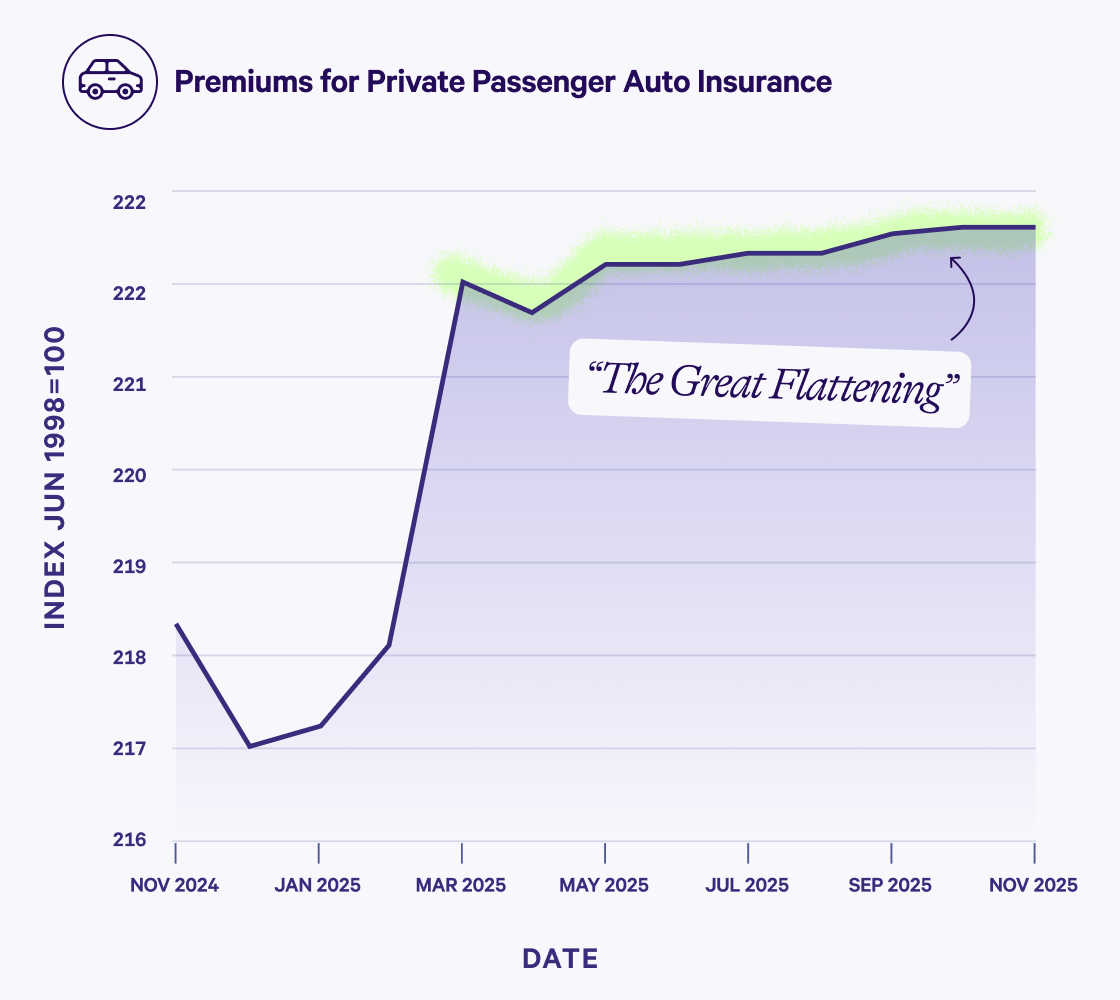 Bureau of Labor Statistics data Car insurance premiums were a flashpoint in the affordability crisis, rising 55% since early 2020 in large part due to the accelerating cost of acquiring and repairing the high-tech parts built into modern vehicles. But since last March, the price of auto insurance has stabilized. Inflation more generally has cooled off too—the cost of eggs, which infamously rose by as much as 400% post-pandemic, has now fallen by more than half since its peak. | ||||||
 | ||||||
| Tracking the collective judgment of the world’s investors about what’s in and what’s out at this exact moment. | ||||||
| For informational and entertainment purposes only; Vested Interest does not make recommendations about trading individual stocks, and the below does not constitute financial advice. | ||||||
 1 ’90s market darling Cisco finally surpassed a share-price peak it set 26 years ago thanks to AI-related demand. 2 The parent company of the Roomba (introduced in 2002) was delisted from the Nasdaq after filing for bankruptcy in part because of tariff costs. 3 Buoyed (haha) by a post-pandemic surge in young and first-time passengers, cruise lines led by Royal Caribbean have been beating earnings expectations. 4 Disney stock fell as it reported slowing business at its U.S. theme parks in part attributable to declining international tourism, an issue which has also been hitting ski resorts. 5 The country’s Kospi stock index led the world in 2025, rising 76% on the strength of semiconductor and defense technology. 6 Stock in Deckers Brands, which owns Uggs and Hokas, is down more than 30% year over year as sales of unusually large footwear have softened. | ||||||
 | ||||||
| He co-wrote the book on how the finance-industrial complex sells stuff that no one needs. Here, his take on credit card rate caps (and some other trending money ideas). | ||||||
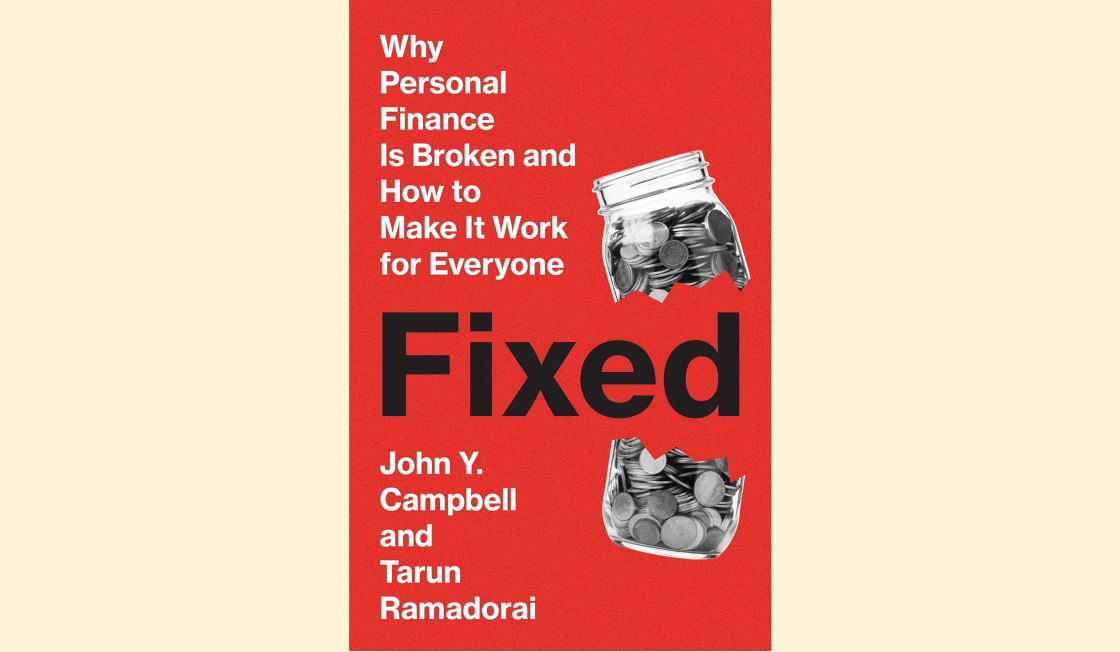 Princeton University Press The amount of financial complexity available to the average consumer increases every day—but in their well-reviewed 2025 book Fixed: Why Personal Finance Is Broken and How to Make It Work for Everyone, economists John Y. Campbell and Tarun Ramadorai made the case that when it comes to money, the most straightforward option is often the better one. We sought out Campbell, a professor at Harvard, to tell us what he sees under the hood of some of the latest alleged innovations in finance—although it turns out that he doesn’t think “new” necessarily means “bad.” What are some ways in which finance can be rigged or, in your words, “fixed”? It’s human nature and incentives—and I would not expect people to hold back from it unless a social norm or regulation says you’re not allowed to do it. Why are there free checking accounts? In some cases it’s because the institution offering them can charge overdraft fees, and if you don’t know what you’re doing, you’ll pay multiple overdraft fees without realizing it. That revenue means that people like me get free checking on the backs of fees other people are paying. Or take the plain-vanilla, 30-year fixed-rate mortgage. If you don’t know to refinance when interest rates are falling, that’s extra revenue for the lender. We’ve heard a lot about a new proposal to cap credit card interest rates at 10%. Would that be good for consumers? The risk is that if you put on a cap and it’s too low, what happens is credit won’t be available at all to some people. So I would argue that this particular approach could backfire if implemented. Now, credit card late fees are also very high—you’re in essence borrowing money for a few extra days when you pay late, and you’re charged a late fee that corresponds to a payday loan-like APR. The so-called war on these kinds of junk fees, that would be a better place to devote efforts. How about giving individuals access to “alternatives” like private equity through their 401(k)s? One argument in favor of doing this is that private firms are a major type of wealth, and academic economists believe that a good way to invest is to try to have some ownership of every type of wealth. But the fees are high, even for large, sophisticated institutional investors, and they’re likely to be even higher for retail investors. Another problem is that because private equity assets are not marked to market, the valuations are, to some extent, always a bit fictional, and it hides risk. You do say the combination of finance and technology can be beneficial. What are the benefits? What’s your take on, say, robo-advisors? There are some great uses of technology, and in the book we mention that robo-advising is one of them. Another example is the convenient and rapid provision of small-scale credit at low cost because IT reduces all the fixed costs of processing and allows lenders to use new kinds of data. But of course, it’s also possible to have Buy Now, Pay Later programs that promote impulse spending. In the case of leveraged ETFs, complex structuring can make it very hard or almost impossible to figure out what fees are being charged. And technology can amplify behavioral biases—one of my favorite examples is a way in which mutual funds in China are marketed [on one popular app]. There’s a screen on your smartphone, and you look at the screen and the mutual funds are listed in order of performance in the last year. So what’s at the top of the screen is the best performing mutual fund over the last year, which might only be there because it made a risky bet and got lucky. So in this case, the technology is encouraging performance chasing, and it’s not going to end well for investors. A recent paper suggests a connection between the fees credit cards are able to charge and the “very large” amount they spend on marketing. Do you see a connection between high fees and high marketing costs? There’s a conventional piece of wisdom, beware the hard sell. Why should you beware the hard sell? The more sales effort that is being made, the more likely there are going to be high fees in that market. That old Groucho Marx quote, I wouldn’t want to belong to a club that would have me as a member. I wouldn’t want to buy any financial product that someone is trying hard to sell me. This conversation has been edited and condensed for clarity. | ||||||
| Share this newsletter | ||||||
 # of mentions of AI in this issue 4 # of mentions of crypto in this issue 1 # of mentions of Burbank, California in this issue 1 |
One new issue, bi-weekly
By submitting your email you agree to Wealthfront’s Terms of Use and will receive newsletter emails at the address provided. You may unsubscribe at any time.