

Vested Interest is a bi-weekly newsletter about what the latest developments in economics and finance might mean for your money, career, and life in general.
By submitting your email you agree to Wealthfront’s Terms of Use and will receive newsletter emails at the address provided. You may unsubscribe at any time.
US stock dominance may or may not be over
April 3, 2026
 | ||||||
| Share this newsletter | ||||||
 This, as we all knew, is the Europa building in Brussels, where the EU is headquartered. Image via samyandpartners, adapted by Wealthfront. | ||||||
 | ||||||
| Three numbers that explain the economic moment. | ||||||
| ||||||
 | ||||||
| The soft landing’s soft landing | ||||||
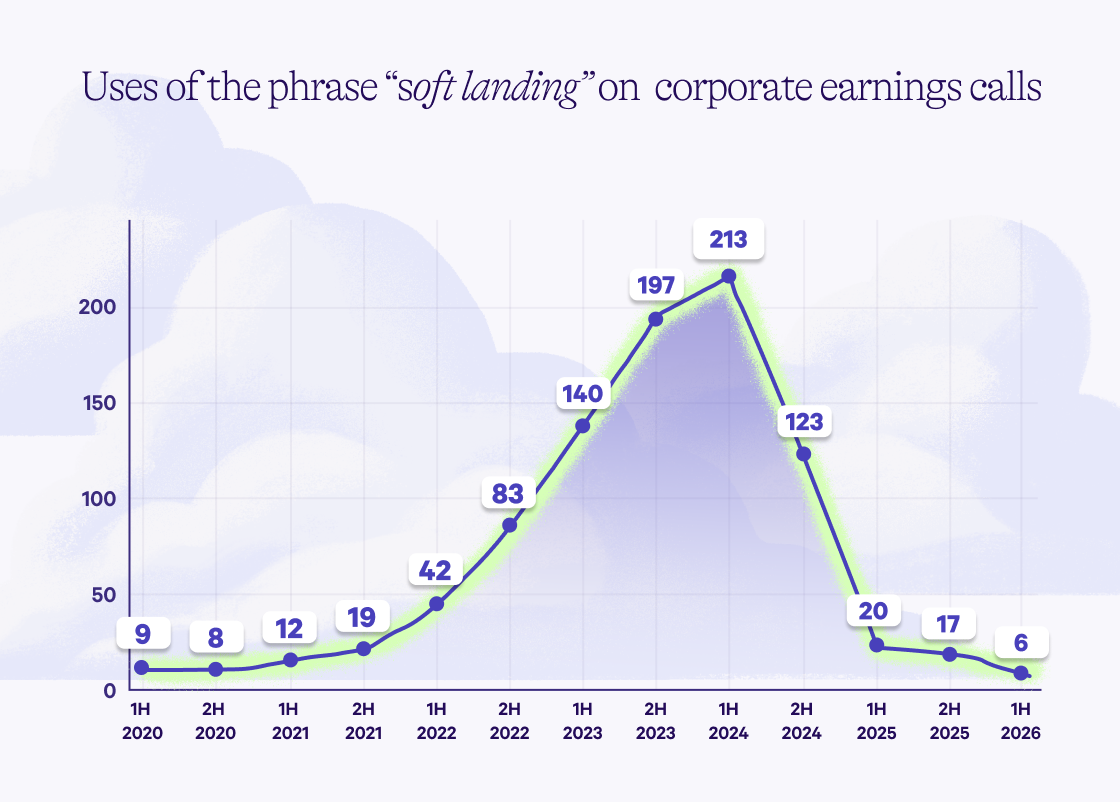 Source: Koyfin Earnings Transcripts Remember the “soft landing”? The phrase referred to the Federal Reserve’s goal of reducing record-high inflation without triggering a broader economic slowdown by raising interest rates juuuuuust the right amount. As investors got distracted by other things, though, mentions of the idea petered out—even if it’s still unclear whether the, uh, gentle touchdown ever actually happened. Here’s hoping that the ascendant macro buzz topic of the moment, i.e. arguing about whether 1970s stagflation is possible in the present day, disappears just as quietly. (There have been 32 uses of the word “stagflation” on earnings calls in the last year, FWIW.) | ||||||
 | ||||||
| What Europe (and Iran) tell us about the (end of the?) era of US stock dominance | ||||||
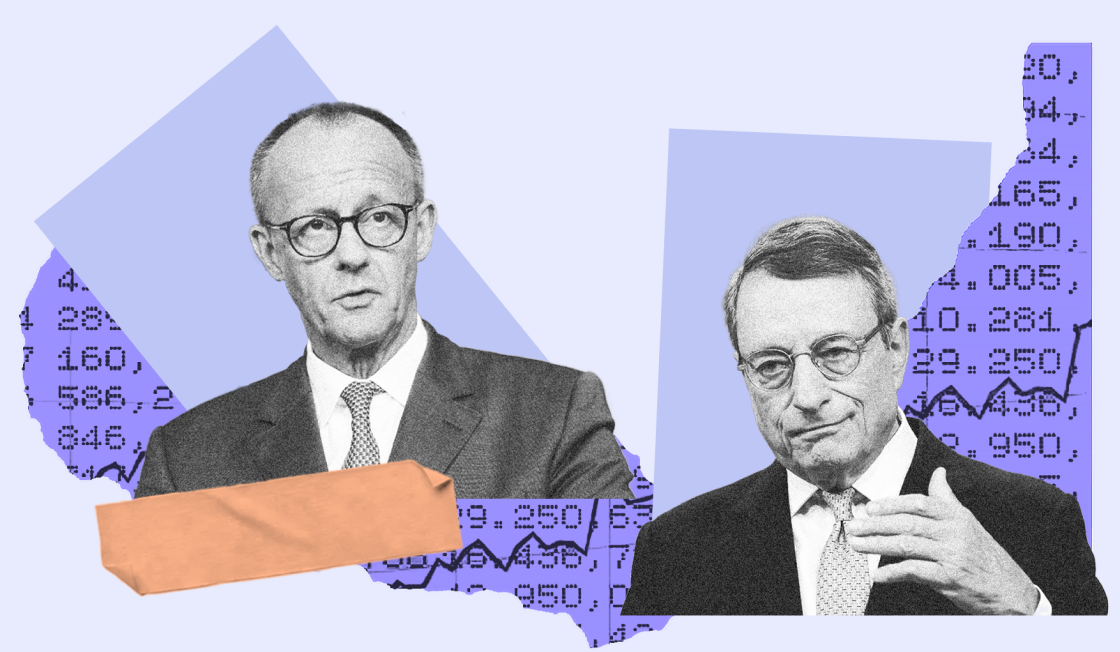 Two people (German chancellor Friedrich Merz and former European Central Bank president Mario Draghi) who would like Europe to have a bit more oomph. Photos by Getty. In December, January, and February, Europe’s Stoxx 600 index returned 10% while the S&P 500 was suffering. But just as everyone was agreeing that this divergence made for a great teaching moment about the importance of global diversification—and possibly that it signaled a regime shift convergent with the sell America trade—Europe tanked. In March, the Stoxx 600 tumbled more than 6%. What’s going on? Is there a regime thingy happening, or not? Does it require you to update your priors about asset allocation? And are we going to keep talking like bank analysts for the rest of this article, or will we start to use regular words? Read on to find out. What Europe has going for it First, the most obvious explanation for interest in the continent: It’s been a bargain. The Stoxx 600 is trading at about 17 times earnings; the S&P 500’s price-to-earnings ratio is 26. For those more interested in present-day fundamentals than potential future upside, that’s appealing. The US dollar, meanwhile, has slid 6% against the euro since Liberation Day, meaning investors who work mostly in dollars get a bump in value when they convert euro gains to US currency. European governments have also been ramping up spending on reindustrialization and defense—spending that will likely flow into corporate earnings. Leading the way was Germany, the continent’s largest economy; last March, lawmakers there approved a trillion-dollar “fiscal bazooka” that launched its benchmark DAX 40 index upward by 25% by the end of the year. European defense stocks as a whole rose more than 90% in 2025. (Volkswagen, it was reported last week, might be retooling one of its auto plants to produce missiles.) All told, investors took a look at all this and plowed more than three times as much money into European large-cap funds in 2025 than they did in 2024. Observers were cautiously optimistic that the trend would continue throughout 2026. What Europe does not have going for it But it didn’t. What explains the recent setback? In one word, Iran; in fifteen words, the European Union relies on imported fossil fuels for more than half of its energy. As Gulf violence slows the flow of oil and natural gas, prices of all sorts of things in Europe will rise. To help keep this inflation under control, the European Central Bank and the Bank of England could raise interest rates as soon as this month, while in March the ECB cut its 2026 GDP growth forecast for the eurozone by a quarter. And less growth means lower corporate earnings. An economy that was thought to be primed for takeoff, in other words, is running out of jet fuel—which speaks to its larger structural problem. In a world of economic interdependence, Europe is more interdependent than most: Like Asia, it largely lacks its own supply of carbon-based fuel, and like the US, its manufacturing sector is in long-term decline. But it’s also failed to cultivate the kind of tech-industry hubs that create homegrown prosperity elsewhere. (Observers blame this on a range of factors ranging from regulatory burdens to cultural norms around risk and failure; former ECB bank president “Super” Mario Draghi issued a much-ballyhooed call to arms on the topic in 2024.) And yet … Should you conclude from this, and the struggles of Asian markets that are also caught in the Gulf energy crunch, that US stock dominance is a permanent fact? Nein! Large US companies have only been the best-performing major asset class in 4 out of the last 10 years, and you only have to go back to the aughts to find an extended stretch of international stock outperformance vis-a-vis the red, white, and blue. By one data firm’s measure, meanwhile, there are now more tech workers moving from the US to Europe than vice versa; more Spotifys and Revoluts may result. Because of Iran, too, Europe’s green-energy providers might be about to experience boom times that could set them up for a less oily global future. If anything can be taken from the past three months, really, it’s the speed at which well-informed assumptions about global events can turn out to be completely wrong—and that those who change their financial plans on the basis of such assumptions do so at their own peril. | ||||||
| Share this newsletter | ||||||
 # of mentions of AI in this issue: 0, somehow # of mentions of crypto in this issue: 0 # of mentions of a central banker’s Nintendo-related nickname in this issue: 1 |
.jpg)
One new issue, bi-weekly
By submitting your email you agree to Wealthfront’s Terms of Use and will receive newsletter emails at the address provided. You may unsubscribe at any time.