

Vested Interest is a bi-weekly newsletter about what the latest developments in economics and finance might mean for your money, career, and life in general.
By submitting your email you agree to Wealthfront’s Terms of Use and will receive newsletter emails at the address provided. You may unsubscribe at any time.
Why the cost of daycare keeps going up
June 12, 2026
 | ||||||
A plethora of summer-themed content, including:
| ||||||
 Well, it’s one version of a future in which child care is cheaper. (Tire swing image via Stocksy. Robo-dog image via Getty. Illustration by Wealthfront.) | ||||||
 | ||||||
| Three numbers that explain the economic moment | ||||||
| ||||||
| Share this section | ||||||
 | ||||||
| I don’t like the cut of your jib, buddy | ||||||
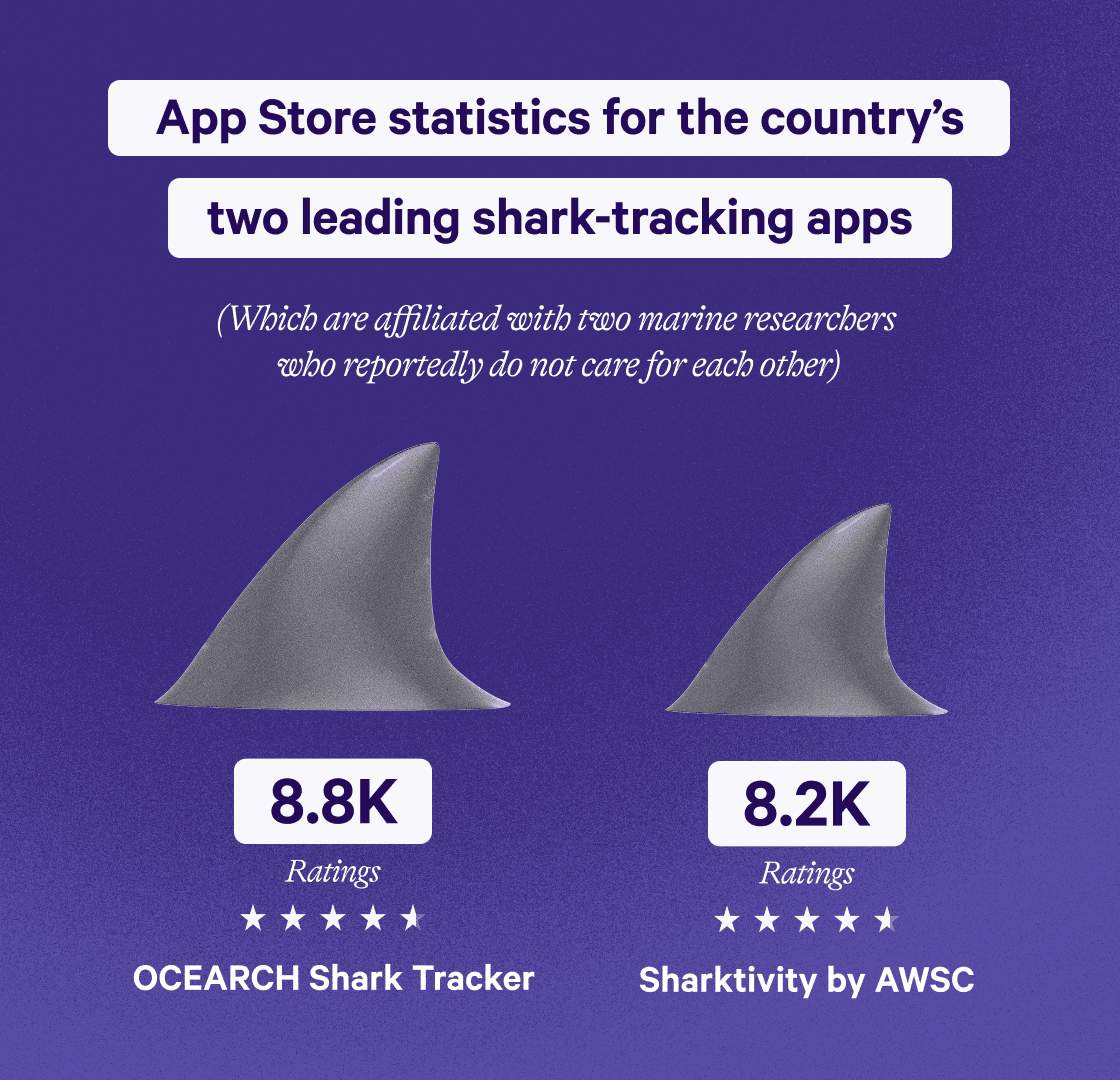 Is frolicking in the ocean worth the possibility of getting bitten and/or eaten? Two highly-rated tracking apps will help you make that decision by displaying the latest known locations of hundreds of tagged sharks. And according to this Boston magazine article, leading researchers at the organizations that operate them do not get along, a frosty relationship that reportedly developed over disputes about survey territory off the coast of Massachusetts. (OCEARCH did not respond to a request for comment; the Atlantic White Shark Conservancy wrote in a statement that “different shark tracking platforms are designed for different purposes and audiences, and we see these as complementary efforts.”) | ||||||
| Share this chart | ||||||
 | ||||||
| A summer Google duel | ||||||
| Can you guess what competing Google search trends you’re looking at here? The labeled dates are a hint. | ||||||
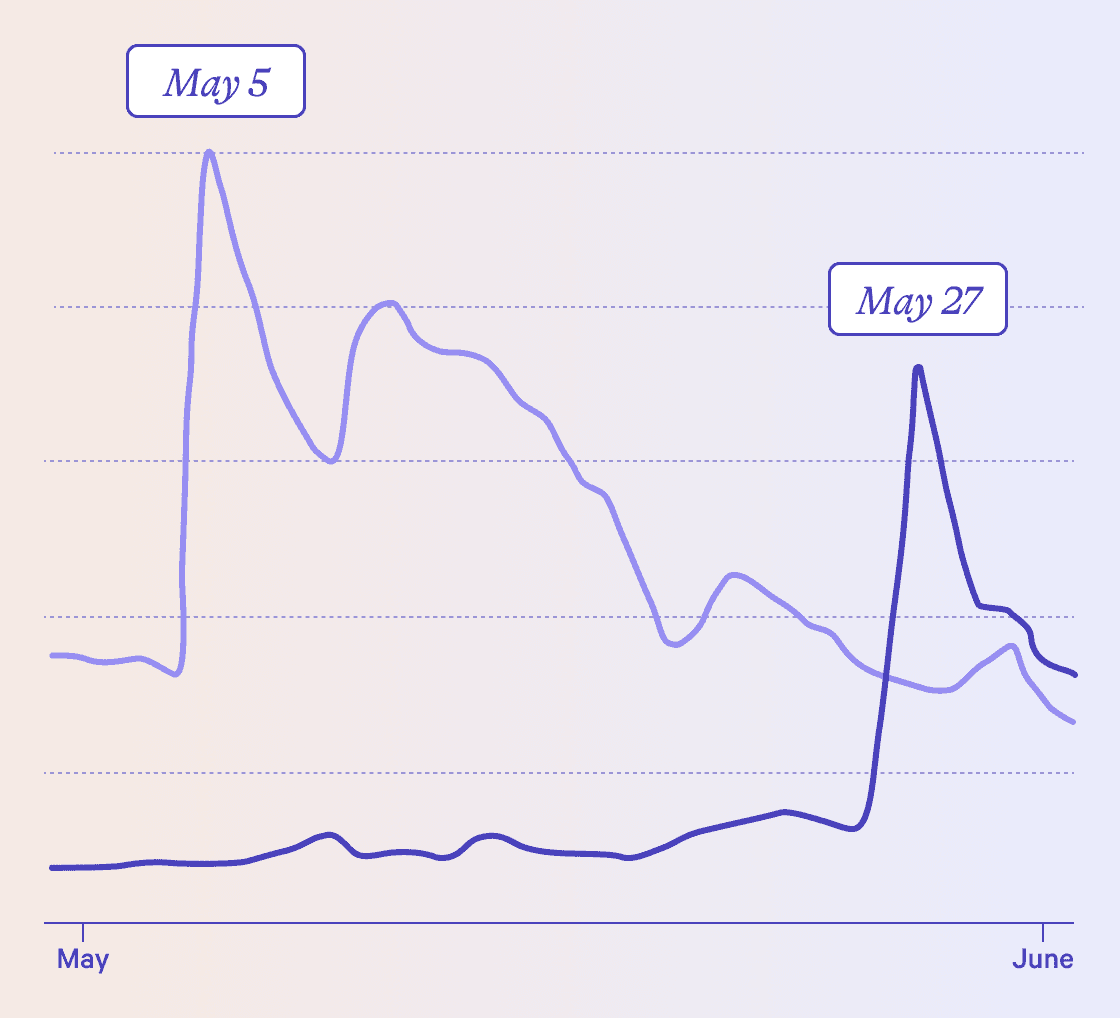 Answer: It’s a comparison of interest in The Odyssey (lighter line) and Disclosure Day (darker line), which are expected to be two of the biggest movies of the summer. (May 5 and 27 were the dates on which they released new trailers.) We mentioned a few weeks ago that going to the movies IRL is back in a big way, and momentum has only grown since. Stocks for theater chains AMC and Cinemark are up double digits in the last month—although stocks for movie studios like Disney and Paramount Skydance are not, which probably says something about how much they’ve tried to move away from “whether people are buying tickets at movie theaters” being the center of their business model. | ||||||
| Share this section | ||||||
 | ||||||
| Why the cost of summer camp (and boarding a dog!) goes up faster than inflation | ||||||
 Image by Wealthfront The American Camp Association says the cost of summer camp went up 20% last year—and if your Vested Interest editor’s experience in New Jersey is any indication, prices in the space have kept ascending. (Theater camp was $496 a week in 2025 and is now $524, a 6% jump. The children will be performing Disney’s version of Hercules.) Indeed, the cost of paying someone to keep an eye on kids—in any season—is outpacing inflation and has been for some time. This is a problem for individual households, obviously, but also the broader economy. And there’s a fundamental-laws-of-markets reason why it’s a tricky one to solve. Let’s discuss! Why it’s bad, beyond the obvious Families burdened by basic costs tend not to be happy about their situation—and financial pessimism has a self-fulfilling quality, leading to choices that can both stymy growth and cause further inflation. (Fun!) A working paper by a Boston University PhD candidate named Abigail Dow found that US child care prices are so high that they’re actually suppressing the birth rate. Which is bad for everyone: When the number of people contributing to the economy in a given country flattens out or declines, its standard of living can flatten out or decline too. High childcare costs can also reduce employment more directly if a parent who wants to be working might feel compelled to stay at home with kids because the alternative is too expensive. If that seems to you like the kind of thing that somebody ought to do something about, you aren’t alone. And in some areas, like energy and housing, there are tools for reducing prices that have found support across the political spectrum—think of the book Abundance and its case for eliminating antiquated regulations and busting through other chokepoints that prevent competition. But a lot of economists don’t believe those tools are likely to be effective in this case. Cats and dogs living together To understand why, look at a clever comparison that economist Alex Tabarrok posted on the blog Marginal Revolution. What Tabarrok found is that the price of pet boarding, which is not regulated that much at all, has been rising just as fast as the price of daycare for humans. If providing care for a human/animal in a less-regulated environment were significantly cheaper in the long run, he reasoned, it would come through in dog-versus-kid data. But he found that it didn’t. (And if you’re not familiar with Marginal Revolution, its authors tend to think that less regulation is usually a good thing.) What’s happening instead in childcare, Tabarrok and other observers from across the spectrum believe, is a demonstration of what’s called Baumol’s cost disease—named after the man who first described it in the 1960s. Baumol noticed that wages for work that had to be done by hand—like performing live music in a string quartet, or carving fancy stone ornaments above the entrances of buildings—were always rising even if the people doing the work hadn’t gotten any more productive. The explanation for this lies in the existence of other jobs that do get more productive, and lucrative, thanks to technology—like, say, starting a factory to manufacture entryway ornaments. If you want someone to keep doing the by-hand job, you have to pay them competitively with the jobs the new technology is creating. What it means for your weekdays Which brings us back to summer camp. One job that will have to be done “by hand” for the foreseeable future is supervising 7-year-olds; all the semiconductor technology in the world won’t make that cheaper. That means the price of child care—and other in-person tasks for which there is no technological shortcut—is likely to keep rising faster than other expenses. (Also relevant: The labor market is a tight one at the moment, which means employers are hiring at high rates while the workforce is staying roughly the same size, which tends to push up wages and thus the cost of services.) Can anything be done to ease parents’ burden, given all of the above? Well, answering that question would require discussing topics like taxation and public spending and work permits on which Vested Interest does not take sides. The immediate takeaway for the average person, perhaps, is not to expect the cost of daycare to come down even if prices for groceries, gas and the like are reined in by an Iran war settlement, interest rate hikes, or other near-term shifts. And as Hercules (probably) says in Hercules, isn’t knowledge (about how you should set expectations for your budget) its own form of strength? | ||||||
| Share this story | ||||||
 # of mentions of AI in this issue: 0 # of mentions of crypto in this issue: 0 # of sharks that are currently right behind you, oh no, watch ou—! grrgglrkrjfjhfjfhaf [biting noises]: 1 |

One new issue, bi-weekly
By submitting your email you agree to Wealthfront’s Terms of Use and will receive newsletter emails at the address provided. You may unsubscribe at any time.