

Vested Interest is a bi-weekly newsletter about what the latest developments in economics and finance might mean for your money, career, and life in general.
By submitting your email you agree to Wealthfront’s Terms of Use and will receive newsletter emails at the address provided. You may unsubscribe at any time.
Crypto … forever? And other questionable investing trends.
September 4, 2026
 | ||||||
Hello! Fall has arrived—and apparently, in the new season, we will still be naming different letters that the US economy is allegedly shaped like. In the issue this week...
| ||||||
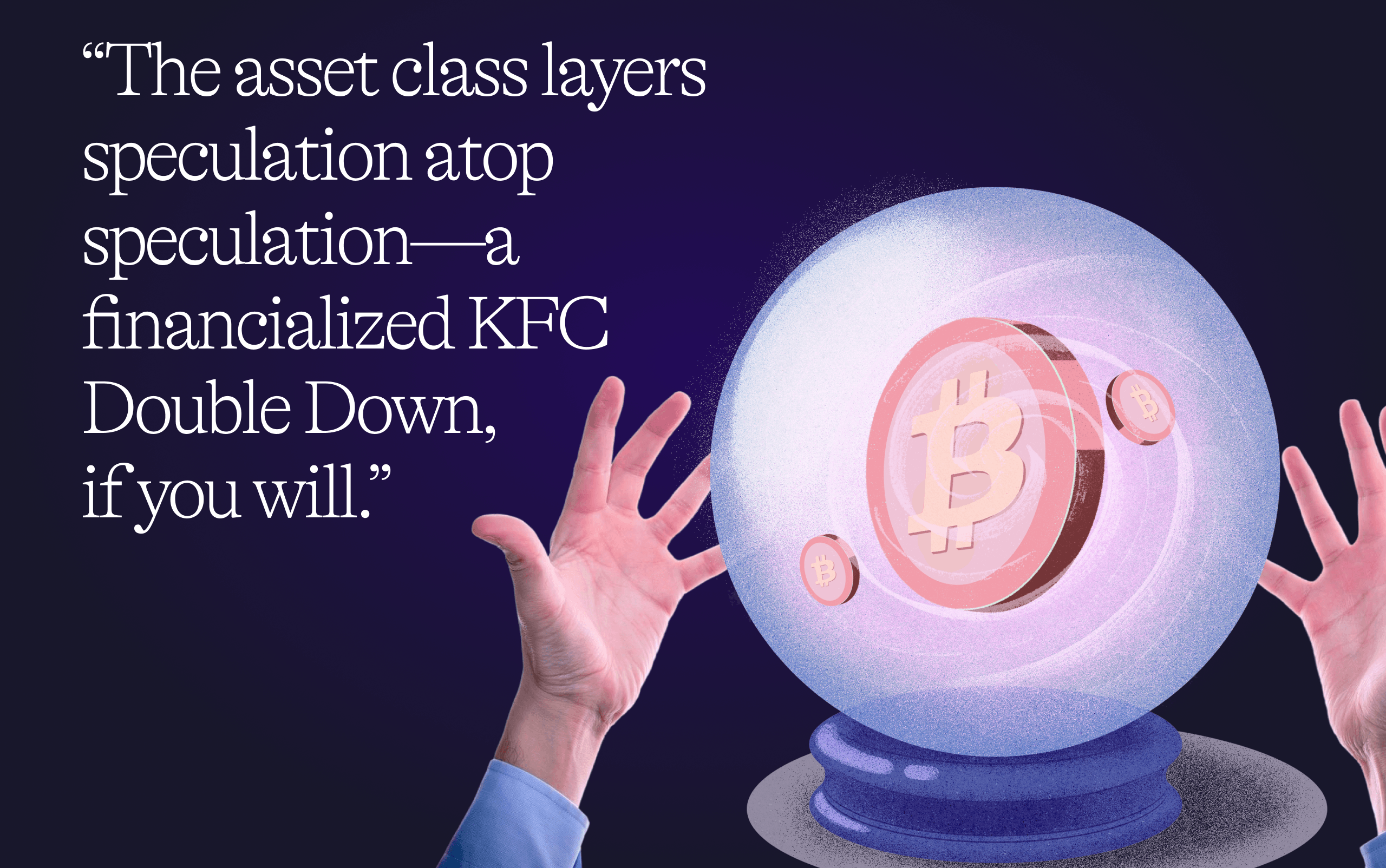 Image by Wealthfront, photo from iStock | ||||||
 | ||||||
| Three numbers that explain the economic moment | ||||||
| ||||||
| Share this section | ||||||
 | ||||||
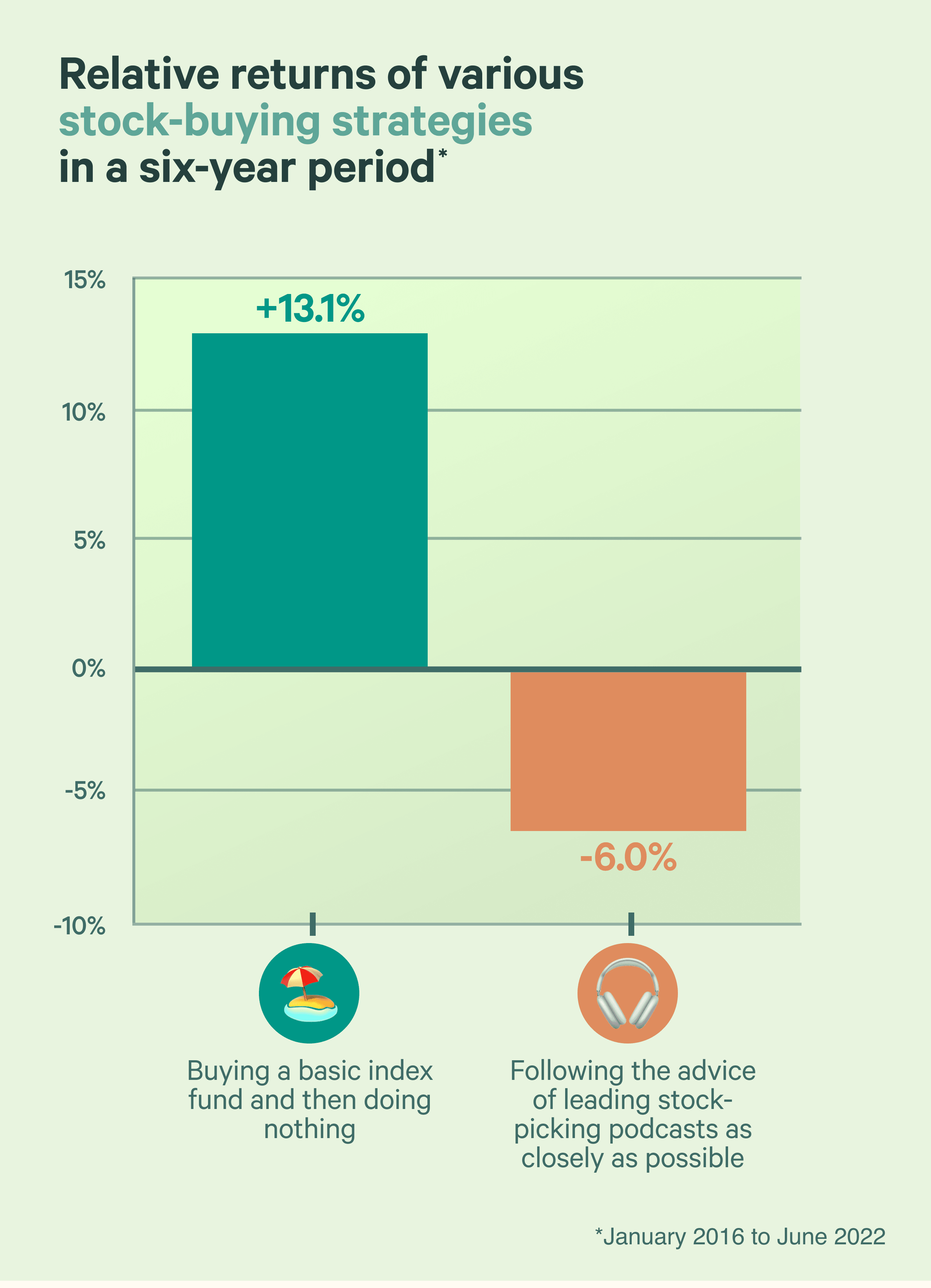 Image by Wealthfront In their April 2026 paper “Do Podcasts Move the Stock Market?”, two German researchers examined a variety of questions related to stock-investing advice podcasts. Among their findings: A portfolio that bought the stocks recommended most often by pod hosts (and shorted the stocks that hosts were skeptical of) underperformed a “passive buy-and-hold market portfolio” by a robust 19% during the period studied. (See also this August study of “finfluencer” recommendations, which concluded that the stock advice given by social media personalities was characterized by “pronounced long-run underperformance.”) | ||||||
| Share this chart | ||||||
 | ||||||
| Where are they now: NFT monkey edition | ||||||
 Image by Wealthfront It’s been almost five years since Jimmy Fallon and Paris Hilton compared ape .jpgs on the Tonight Show, the moment future anthropologists will likely identify as the peak of the heady “Web3” era. Here’s how the most notable Bored Ape NFT purchases, including theirs, have since fared in the marketplace. (In short: Whoops.)Justin Bieber, or someone close to him, spent the equivalent of $1.3 million in ETH on an NFT (“non-fungible token”) attesting to his ownership of this particular image. (ETH, or ethereum, is the second-largest cryptocurrency by market cap and was built to support the “smart contracts” used to “mint” NFTs.) Were he to accept the highest current bid for his ape on the OpenSea platform, he’d make $18,700 for a return on investment of negative 99%.This .jpg of a monkey wearing a propeller beanie went for $3.41 million on Sotheby’s “Metaverse marketplace” in October 2021, the most expensive Bored Ape ever; a few months later, Baroque master Peter Paul Rubens’ “Portrait of a Lady” would sell for the same price. The highest current bid for it on OpenSea is $106,800, a 97% drop. Sotheby’s has not posted on its metaverse page for four and a half years.Tonight Show host Fallon got his Margaritaville-vibes ape for $215,600, and, going by its current highest offer, it’s since down 91%. His discussion of the artwork with Hilton (who owns #1294, down 94%) got him included in a class-action lawsuit—the pair and other celebs were accused of conspiring to hype up the price of their holdings. A judge dismissed the suit, though, after finding that monkey .jpgs are not covered by securities law because they don’t count as securities. | ||||||
| Share this section | ||||||
 | ||||||
| “Perpetual crypto futures” are the latest big thing in retail trading. What could go wrong? | ||||||
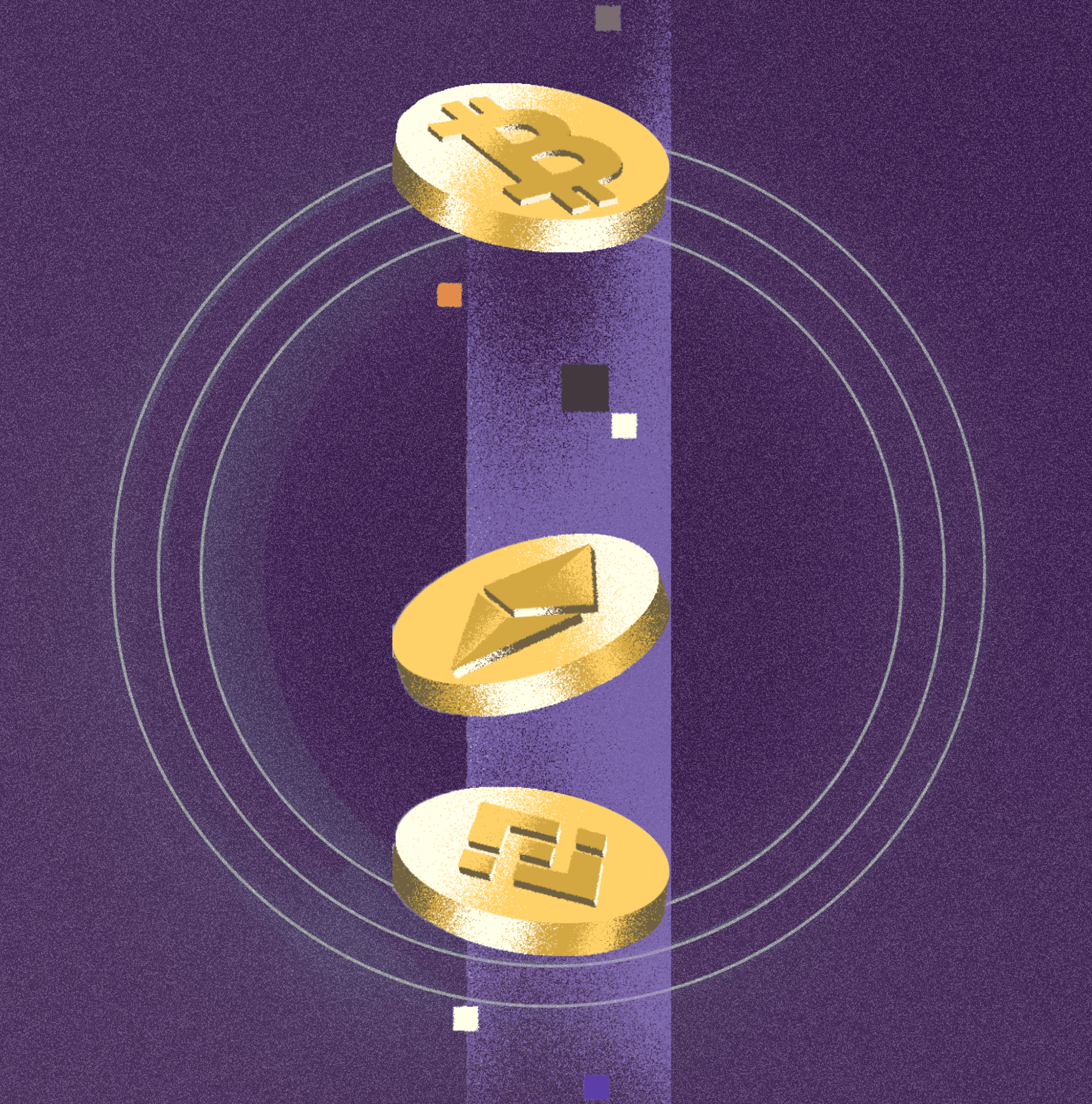 Image by Wealthfront In May, the Commodity Futures Trading Commission approved a “perpetual futures contract” tied to the price of Bitcoin for trading on Kalshi, the platform whose users can also speculate on events like whether Minions and Monsters will win an Oscar. More recently, the president hinted at a path to US regulatory approval for the dominant offshore platform in so-called “perp” trading, Hyperliquid. Futures aren’t new. Neither are perps. And neither is their use in crypto, actually: They’ve been available offshore since 2016, accounting by one measure for 68% of all Bitcoin trading volume last year. Their arrival in a regulated American marketplace, however, is new. So let’s discuss what they are, how they work, why some retail traders like them, and what downside they might have (it rhymes with “losing all your honey in ten minutes”). OK: A regular, non-perpetual futures contract lets someone speculate on the price of an underlying asset without owning it. The trader can go long, speculating the price rises, or short, hoping it falls. Take this hypothetical: Let’s say on a given day that the market price of Bitcoin is $70,000. Under a typical contract, a buyer might go long Bitcoin by speculating that in a month, it will be worth more than $75,000. That buyer’s “counterparty” is short Bitcoin, venturing that it will be worth less than that. If its market price or spot price turns out to be $80,000 on the settlement date, the long side has earned $5,000, and the short side has lost the same amount. They’ll likely conclude their transaction by having the short trader deliver the long trader $5,000 cash, probably via the exchange that brokered their deal. All either party had to put down initially was whatever margin, or collateral, was required by the exchange (plus transaction fees). But perhaps the long trader wants to keep speculating on Bitcoin, thinking it has more room to run. A perpetual contract doesn’t have an expiration date, which means the trader doesn’t need to “roll” their bet into a new contract, thereby accruing transaction costs. You could go long or short on a given Bitcoin price, and keep it open for as long as you want before closing it out and taking your profit—or until you lose the money you put down initially. Carol Alexander, a professor of finance at the University of Sussex Business School and one of the world’s leading experts on crypto markets, observes that this arrangement has its uses. A hedge fund holding $1 billion in Bitcoin could hypothetically take the short side of Bitcoin perps such that if Bitcoin fell 10 percent, the fund’s $100 million loss on the asset itself would be offset by a roughly similar gain on perps. If Bitcoin rose, all they’d lose is the margin they had to put down on the perp contract. Which speaks to what perps offer the scores of retail traders who seem to want them: “Leverage,” in Alexander’s words, i.e. putting only a little bit of money down in order to get “exposure” to big gains or losses. (“High leverage is awesome,” one 19-year-old perp enthusiast told the Financial Times.) An exchange might only ask a trader to put down $200 to open a future that goes long on $1,000 of Bitcoin, for instance. If its price goes up 20 percent, the trader will have made $200 on their initial investment. But if Bitcoin drops 20 percent from its starting price, the trader has lost $200, and unless they post more margin, their position will be liquidated and the $200 they originally put up will be lost. “You wake up in the morning, everything’s gone,” Alexander says. The bigger the leverage, the more acute this risk becomes. The largely unregulated exchange Binance, to take one example, offers leverage of 125-to-1. Like options and other derivatives—so-called because their value is derived from an underlying asset that you don’t necessarily have to purchase—perps offer an efficient way for individual investors to set cash on fire quickly. One recent study of India’s booming retail derivatives market found that 91% of its participants lost money. And as we mentioned recently, the Financial Industry Regulatory Authority’s educational foundation found that only 1 in 5 active investors in the US were able to correctly identify how much money they’d lose on a hypothetical transaction that involved buying on margin. Also: “Don’t forget that Bitcoin has no fundamental value whatsoever,” Alexander adds. The asset class attracts investors with an appetite for risk, and perps offer a way to layer speculation atop speculation—a financialized KFC Double Down, if you will. The person who first introduced perpetual crypto futures on the offshore platform BitMEX, as it happens, later pleaded guilty to federal charges that he “willfully failed to implement an anti-money laundering program at the exchange.” (He later received a presidential pardon.) In any case, there remains no federal regulation—covering Bitcoin or any other kind of asset—that says you have to be using a given financial product in a smart way. Speaking of which, the chance that Minions will be nominated for an Oscar currently runs around 36%. Caveat emptor! | ||||||
| Share this story | ||||||
 Four more dubious trends we didn’t have room to fit in the issue: Buying diamonds after looking at them for 10 seconds on TikTok, popcorn containers becoming an asset class, telling your podcast audience how you circumvent sports betting laws, and speculating in the philodendron market because you got bored during COVID. Caveat emptor for all that stuff too! |
One new issue, bi-weekly
By submitting your email you agree to Wealthfront’s Terms of Use and will receive newsletter emails at the address provided. You may unsubscribe at any time.